

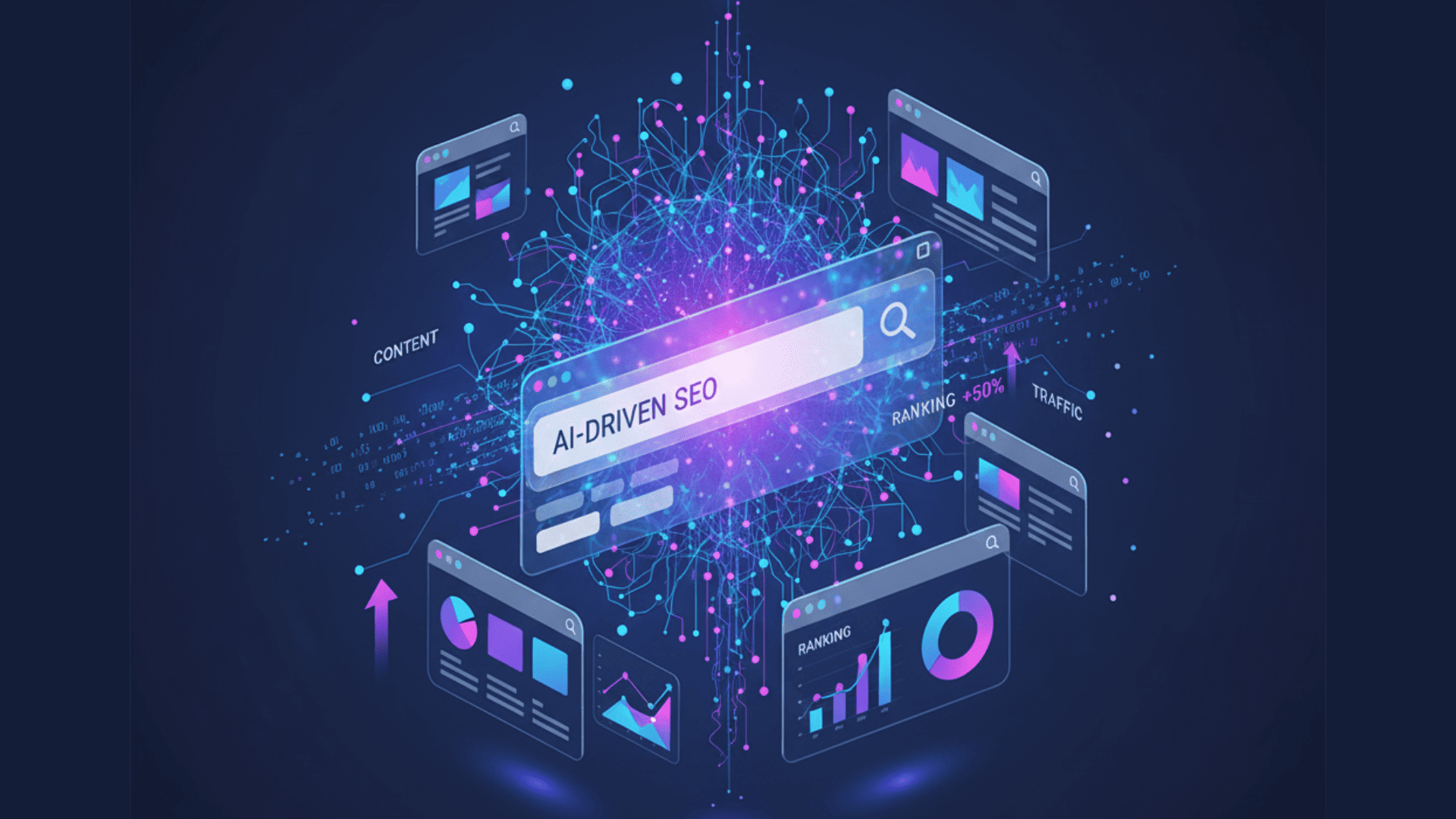

Google’s “AI Mode” changes how searchers consume information. Instead of clicking through multiple blue links, users increasingly receive AI-generated answers or overviews that summarize results directly on the results page. How AI Mode is transforming SEO is evident in multiple recent studies showing that this behavior is already reducing outbound clicks in many search sessions. As the ecosystem shifts, marketers must move from a pure traffic mindset to one centered on brand influence, answer-quality, and downstream conversion.
What the research shows (key takeaways)
1. External clicks drop significantly in AI Mode sessions. Large analyses report that the majority of AI Mode sessions produce no external clicks, estimates range (in the studies aggregated) from roughly 78% up to 92–94% of sessions with zero outbound visits. This is more than a small change; it transforms where and how value is delivered from organic search.
2. Session length and query behavior change. AI Mode sessions frequently include fewer queries per session (e.g., 2–3 queries vs ~5 in classic search), and user engagement patterns shift sometimes users consume AI answers and move on without clicking. That reduces opportunities for traditional discovery and multi-touch attribution.
3. Not all queries behave the same. Transactional or shopping tasks still drive clicks at much higher rates, users often click to complete purchases. In contrast, non-transactional, informational tasks are much more likely to be satisfied within AI Mode. This implies a divergence: some intents still send traffic; many do not.
4. Adoption is rising but mixed. Early studies show that overall user adoption of AI Mode is variable, some tests found modest direct use, while usage patterns are evolving quickly as features are integrated into Chrome and SERP UI. Google’s product signals indicate a long-term push toward AI-first experiences.
Implication: SEO teams must broaden success metrics beyond clicks and rankings to include brand visibility inside AI responses, answer quality, conversions that happen after the AI interaction, and offline/assisted attribution.
How AI Mode is transforming SEO which affects the traditional SEO funnel
AI Mode compresses the top of the funnel: users can get synthesized answers without visiting your page. That means:
- Reduced discovery via organic clicks for informational queries.
- Greater importance of being featured in AI answers (the “answer economy”) brand mention, authoritative signals, concise factual responses.
- Transactions still funnel clicks commerce and booking intent often lead users off the AI surface to convert.
- Measurement gaps traditional GA metrics under-report brand influence inside AI.
Adaptation requires both content engineering (create answerable content) and measurement evolution (track assisted conversions, brand lift, and brand mentions).
Concrete tactics ShivOli recommends (short, medium, long term)
Reframe KPIs-measure influence, not only clicks
- Add metrics for brand presence in AI answers: track brand mentions, citations from AI summaries, and SERP snippets that include your brand.
- Track assisted conversions and downstream behavior (direct traffic lift, branded search, time to conversion) as indicators of AI-driven influence.
- Use surveys and brand-lift tests to quantify perception changes after AI visibility.
Why: If AI Mode reduces clicks, influence inside AI and the ability to drive later-stage actions become the new leading indicators of ROI.
Optimize for answers: structured, concise, authoritative content
- Produce short, authoritative answer blocks near the top of pages (FAQ snippets, TL;DR summaries, clear data points).
- Use structured data (FAQ, Q&A, How to, Product) and schema markup to increase the chances that AI systems will cite your content.
- Emphasize factual clarity, sources, and up-to-date data in answerable content.
Why: AI syntheses rely on high-quality, well-structured sources. Being explicitly citable increases the chance your brand is used as a source (even if clicks are low).
Build brand signals and authority (mentions, citations, PR)
- Invest in digital PR that earns mentions on high-trust domains which AI models are likely to consult.
- Create concise, quotable insights and data studies your industry will cite (original research is highly “linkable” and citable).
- Encourage syndication of key insights on industry publications.
Why: AI systems and aggregators prioritize authoritative and cross-referenced sources. Brand visibility in those sources increases your representation in AI answers.
Focus paid and transactional channels where clicks still happen
- Prioritise performance marketing (PPC, social ads) for high-intent transactional keywords where AI Mode still sends users to purchase pages.
- Use retargeting and omnichannel funnels to capture users who were exposed to an AI answer but did not click immediately.
Why: Paid channels remain essential to capture conversion intent that AI Mode does not satisfy directly.
Improve on-site conversion paths for the clicks you still get
- If clicks are rarer, each click becomes more valuable. Remove friction: faster pages, simpler forms, clearer CTAs, trust signals.
- Instrument full-funnel attribution (UTMs, server-side tracking, conversion API) to link visits to outcomes.
Why: With fewer visits, conversion rate lifts (CRO) have an outsized revenue impact.
Monitor AI accuracy & reputation risk

- Run regular fact-check audits on the content AI systems return about your brand or industry.
- Prepare PR/SEO playbooks to correct misattributions or inaccuracies (publish corrections on authoritative sites, update canonical pages).
Why: Studies show AI Mode sometimes answers without links or with imperfect accuracy, brands must protect reputation and correct errors quickly.
Tactical playbook
30 days (quick wins):
- Audit high-value pages and add concise answer blocks and schema.
- Configure or fix GA4 + server-side tracking + conversion APIs.
- Run paid tests on transactional keywords to ensure conversion capture.
90 days (mid-term):
- Launch a digital PR campaign to earn authoritative mentions.
- Build a content map prioritizing “answerable” queries (how, what, why) and transactional content.
- Begin A/B tests on landing pages for higher conversion rates.
180+ days (strategic):
- Publish original studies or data assets that industry outlets will cite.
- Implement a brand-lift measurement program to quantify AI exposure impact.
- Integrate AI monitoring and reputation workflows into SEO & comms teams.
Measurement & reporting changes you should make now
- Move from “clicks & ranking” dashboards to combined dashboards that include: brand mentions, SERP feature share, assisted conversions, direct traffic trend, and on-site conversion rate.
- Use cohort analysis to see whether users who were exposed to AI responses convert differently (timing, channels).
- Track answer-level visibility where possible (which pages are being summarized by AI).
Why: These metrics will indicate whether your brand influence in AI Mode translates to business outcomes.
FAQs (quick answers for stakeholders)
Q: Will AI Mode kill organic traffic entirely?
A: Not necessarily. Some intents (especially transactional) still drive clicks. But informational traffic patterns are changing, expect lower CTRs for many queries. The focus must expand to brand influence and downstream conversions.
Q: Should we stop investing in content?
A: No. Invest in better content, content that is authoritative, structured for answers, and supports conversions. Combine content with PR and technical SEO to remain citable.
Q: How do we prove ROI when clicks fall?
A: Use broader attribution: measure brand lift, assisted conversions, and long-term revenue from organic exposure. Build experiments that tie exposure (even without clicks) to later conversions.
ShivOli’s recommended checklist for leadership
- Update KPIs: brand mentions, assisted conversions, conversion value per visit.
- Launch a schema & answer-block remediation sprint for top 200 pages.
- Start a 90-day digital PR program focused on data assets.
- Rebalance budget: increase paid spend on transactional funnels; fund CRO for remaining organic visits.
- Implement continuous AI-answer monitoring and a rapid correction playbook.
Conclusion
AI Mode changes distribution, but it doesn’t remove the need for expert marketing. Brands that focus on being the trusted, citable source, optimize the experience for the valuable clicks they receive, and tie influence to measurable outcomes will win in the new search paradigm. At ShivOli, we help clients retool their SEO, content and paid strategies for this future: combining creativity, data and ethical practices to protect and grow brand value.